
RFM marketing is a way to segment your customers based on their behavior, specifically how recently they bought from you, how often they do so, and how much they typically spend.
Not all customers are equal in terms of value or engagement, and these three dimensions, Recency, Frequency, Monetary value, give marketers a reliable signal of who’s most valuable or at risk of churning.
For example, someone who made a large purchase last week and does so often is likely a loyal, high-value customer. Someone who bought once, a year ago, for a small amount is probably not worth spending much budget on.
First, your data platform (e.g., Braze, MoEngage) calculates RFM scores for each customer. This can be something as simple as assigning scores from 1 to 5 for Recency (how recently they bought), Frequency (how often they buy), and Monetary value (how much they spend).
Based on these scores or resulting segments, like VIP, new buyer, about to churn, low value, you can design different promotion strategies. The goal is to align the value of the promotion with the customer’s potential value.
Next, your CDP or CEP sends the segment ID as metadata to Voucherify. When you want to run a promotion, say, send a batch of promo codes or run a dynamic discount – you can use that RFM segment to control who receives a promo code (targeted distribution), what value they get (dynamic discount value based on their segment), and when and how the promo can be redeemed (e.g. VIP-only perks vs win-back limited-time offers).
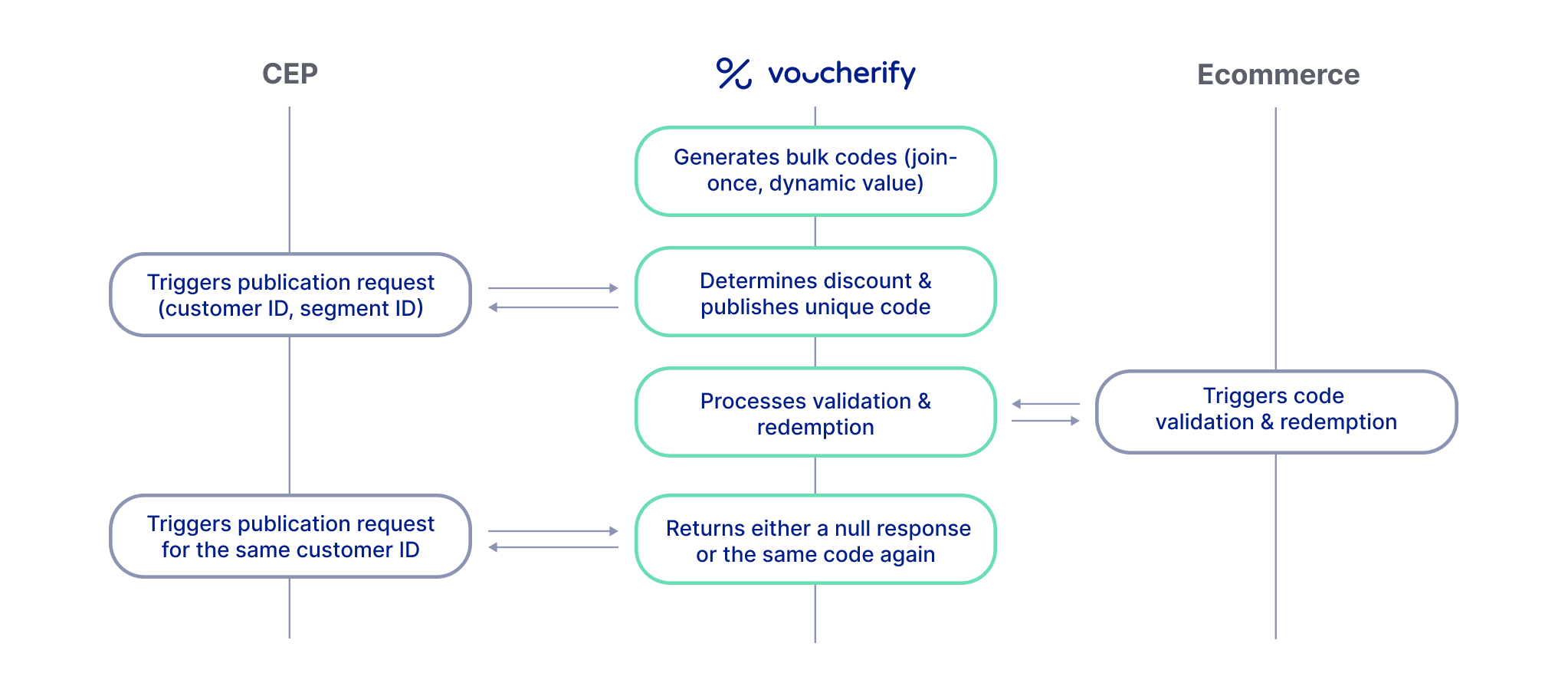
With Voucherify, this is super flexible:
The big benefit is that you don’t need to create a dozen separate campaigns. You can run one smart, flexible promotion that adapts itself to the customer’s current value and needs and lets you fine-tune business outcomes.
.svg)
